Why Your Lawn Desperately Needs to Breathe
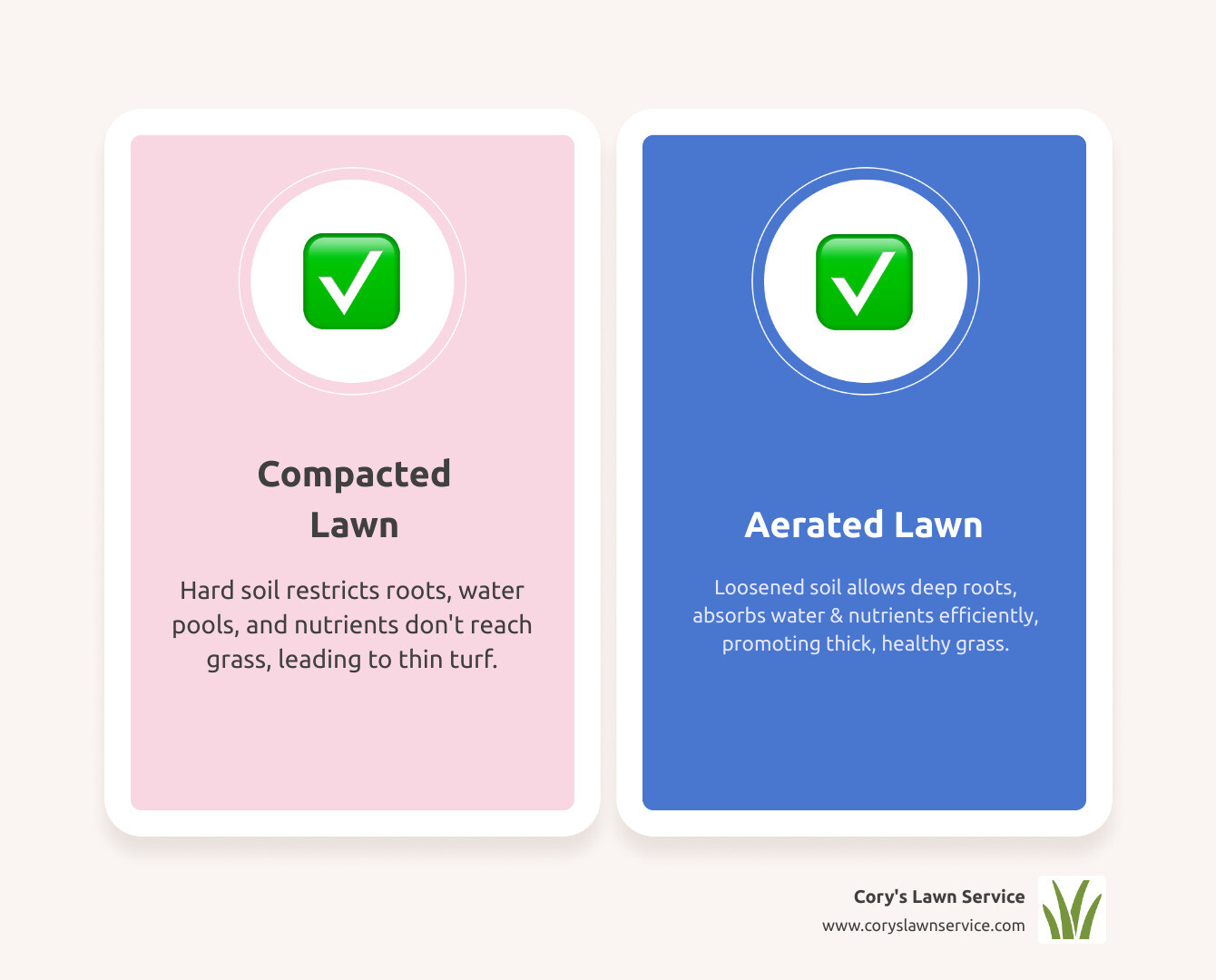
If your lawn feels hard, water pools after rain, or the grass looks thin despite regular care, you're likely dealing with compacted soil. Over time, foot traffic and heavy clay soil squeeze the air out, preventing roots from accessing the oxygen, water, and nutrients they need to thrive. No amount of watering or fertilizing can fix it.
Core aeration is the solution. This process mechanically removes small plugs of soil and thatch, creating pathways for essentials to penetrate deep into the root zone. The results are dramatic, as core aeration benefits your lawn in numerous ways:
- Relieves soil compaction - Creates space for roots to grow and breathe
- Manages thatch buildup - Introduces microbes that break down dead organic matter
- Improves water and nutrient uptake - Allows fertilizer and moisture to reach deep roots
- Promotes stronger root systems - Encourages deeper, more resilient grass growth
- Improves drought tolerance - Reduces water runoff and improves retention
- Prepares soil for overseeding - Creates ideal seed-to-soil contact for germination
- Reduces standing water - Improves drainage and prevents puddling
Aerated lawns develop deeper roots, resist drought better, and grow thicker turf that naturally crowds out weeds. Water soaks in instead of running off, and your fertilizer finally reaches the roots where it belongs.
I'm Cory Bettinghouse, and I've spent nearly two decades helping Reno homeowners understand core aeration benefits and restore their lawns in our challenging high desert climate. Working with our heavy clay soils and extreme temperature swings has taught me that aeration isn't optional—it's essential for long-term lawn health.
What is Core Aeration and How Does It Work?
Most homeowners know their lawn needs aeration, but understanding the process helps you appreciate why core aeration benefits are so dramatic.
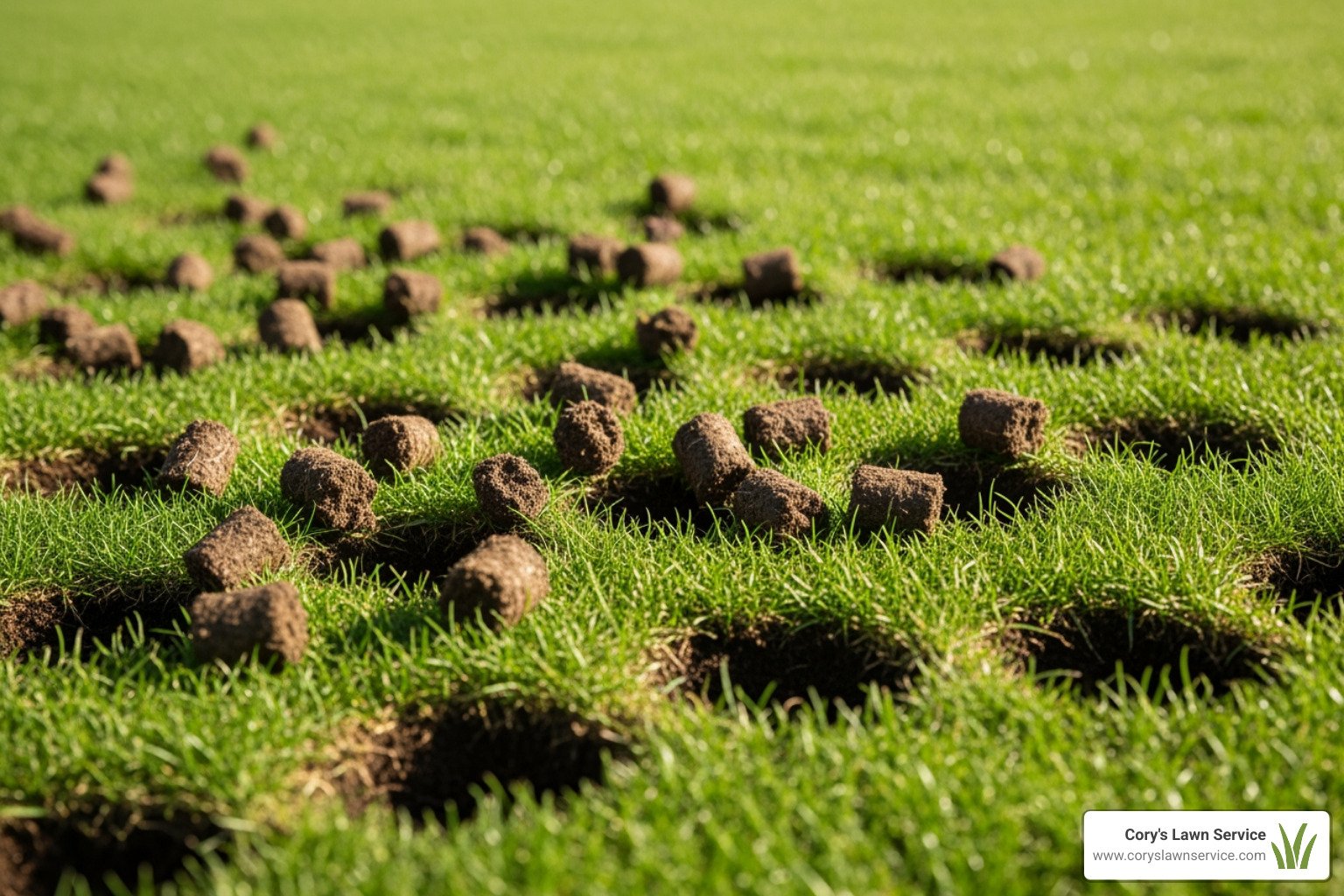
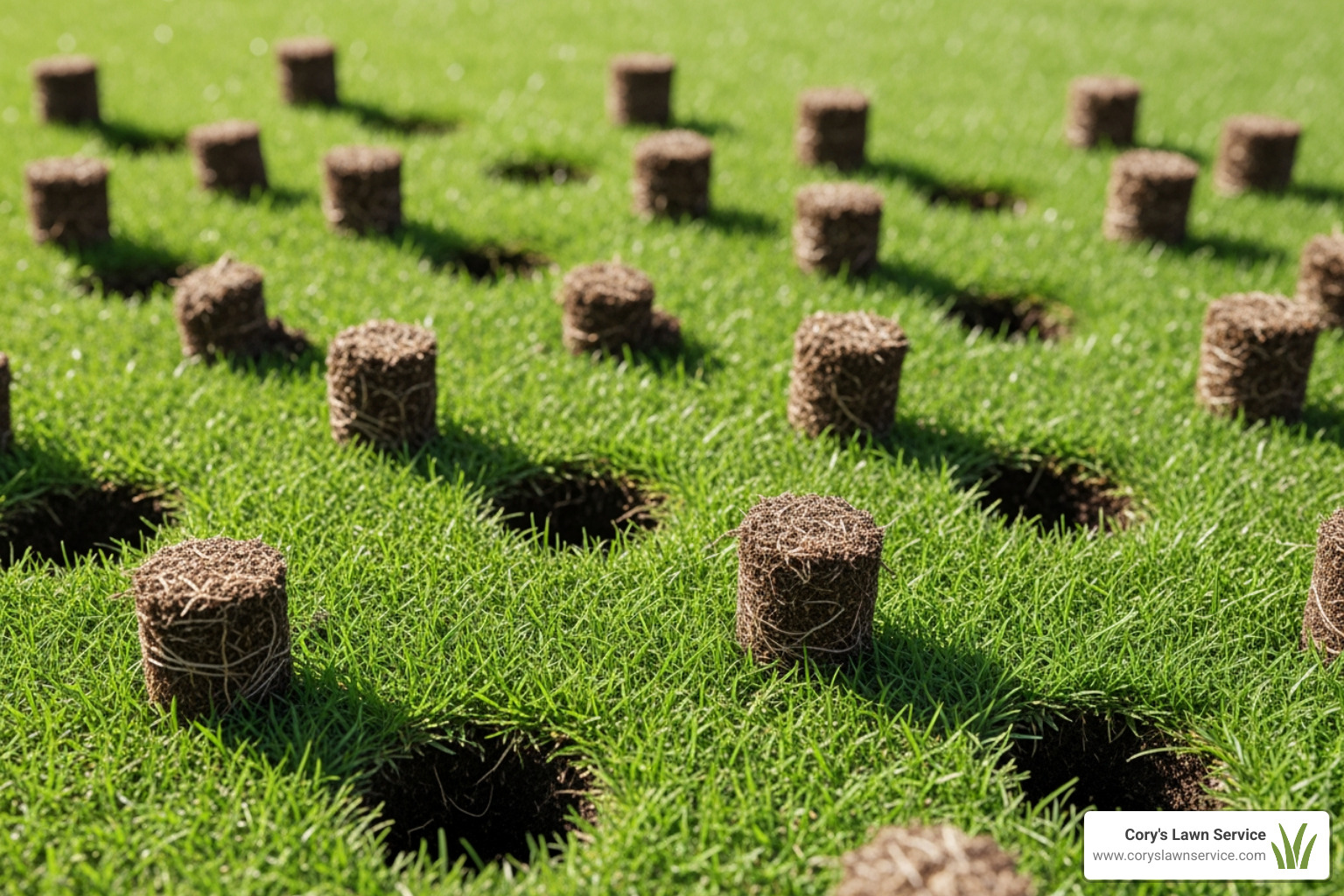
Core aeration is a mechanical process using specialized equipment with hollow tines to physically remove small plugs of soil from your lawn. These tines penetrate 2 to 4 inches deep, extracting cores about ½ to ¾ of an inch in diameter. This is fundamentally different from just poking holes; core aeration actually removes soil plugs, which immediately relieves the compaction choking your grass.
The process leaves behind thousands of small holes that act as direct pathways for air, water, and nutrients to reach the root zone. The soil cores left on the surface might look messy, but they are beneficial. They contain microbes that help break down thatch—the layer of dead organic material suffocating your grass. As the cores decompose over a week or two, they return nutrients to the soil.
This process lets your lawn breathe again. In Reno's heavy clay soils, this mechanical intervention is critical. Water soaks in, fertilizer reaches the roots, and oxygen flows where it's needed most. Seeing those cores on your lawn is the first step toward a healthier yard. Learn more about Aerating Your Lawn and how our team can help your grass thrive.
The Top 7 Core Aeration Benefits for a Healthier Lawn
After nearly two decades working with Northern Nevada lawns, I can tell you that core aeration consistently delivers results. It's a proven method that addresses the root causes of lawn problems. Here are the seven most significant core aeration benefits we see changing Reno-area lawns every season.
1. Alleviates Harmful Soil Compaction
If your lawn feels rock-hard, that's soil compaction at work. Common in Reno's dense clay soils, compaction is caused by foot traffic, kids playing, and even normal equipment use. It squeezes out essential air space, trapping grass roots in the top few inches of soil where they struggle for water and nutrients.
Core aeration directly solves this by physically removing plugs of soil. This instantly creates space, loosens the compacted structure, and allows roots to grow deeper, making your entire lawn more resilient. For more on maintaining healthy soil, visit our Lawn Health Reno page or review this information on compacted soil from Clemson Extension.
2. Manages Excessive Thatch Buildup
A thin layer of thatch (organic material between grass and soil) is healthy, but when it exceeds half an inch, it becomes a suffocating blanket. This thick layer blocks water, fertilizer, and air, while creating a haven for pests and diseases.
Core aeration tackles thatch in two ways. First, the tines physically pull out some of the thatch with the soil cores. Second, and more importantly, the holes introduce soil microorganisms into the thatch layer. These microbes work 24/7 to break down the organic debris, naturally thinning the thatch over time. For more on this, see our guide on Dethatching Lawns in Reno.
3. Boosts Nutrient, Water, and Air Circulation
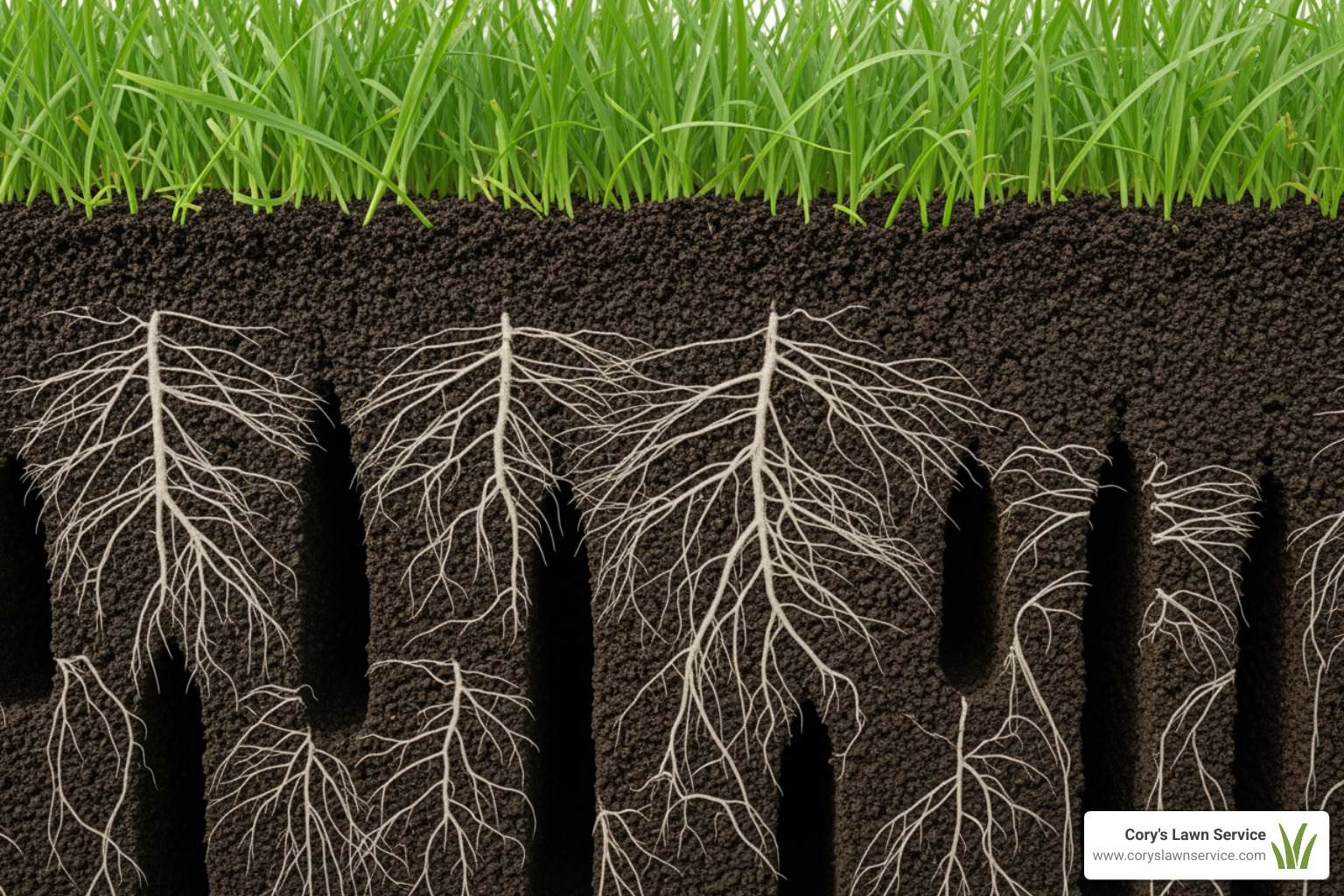
Trying to feed and water a lawn with compacted soil is like trying to fill a bottle with the cap on. Core aeration opens up direct channels to the root zone, ensuring everything your grass needs gets to where it's needed.
- Fertilizers finally reach the root zone instead of washing away.
- Water soaks in immediately rather than pooling or running off, which is crucial in our dry Reno climate.
- Oxygen flows freely to the roots, fueling the energy needed for healthy growth.
This improved circulation makes your grass use water more efficiently and respond better to fertilization, leading to the deep green color of a truly healthy lawn. This is a cornerstone of our Lawn Care Program.
4. Promotes Stronger Roots and Thicker Turf
The health of your lawn above ground is determined by what's happening below. When roots are restricted, your lawn will look thin and weak. Core aeration removes these barriers, allowing roots to grow longer and stronger.
This deep root network can access more resources, resulting in noticeably thicker turf. A dense lawn is nature's best weed barrier, as weeds can't find space to germinate. It also makes your lawn more resilient to foot traffic and environmental stress. Learn more about Understanding the Importance of Turf Density.
5. Improves Drought and Heat Tolerance
Northern Nevada summers are tough on lawns. The difference between a brown, crispy lawn and a green one often comes down to root depth. Shallow roots can only access surface water that evaporates quickly. Core aeration promotes deeper roots that can tap into moisture reserves several inches down, which last much longer between waterings.
Aeration also improves water infiltration, reducing runoff and evaporation. Your lawn makes the most of every drop, bounces back faster from summer stress, and requires less water to stay healthy. This aligns with proven methods for making lawns more drought-resistant.
6. Creates the Ideal Conditions for Overseeding
Overseeding right after aeration is the most effective way to fill in bare spots and thicken your lawn. The holes created by the aerator are perfect pockets for grass seed, ensuring critical seed-to-soil contact. This protects seeds from wind and birds and creates a moist microenvironment for germination.
For the best results when overseeding after aeration:
- Double aerate in a crisscross pattern to maximize seed placement.
- Apply grass seed generously for even coverage.
- Gently drag the lawn with a mat to knock seeds into the holes.
- Keep the area consistently moist for 21 to 28 days while seeds establish.
This combination produces a noticeably thicker, more uniform lawn that naturally resists weeds and disease.
7. Reduces Water Puddling and Runoff
Water pooling on your lawn or running into the street is a clear sign of compaction. The soil can't absorb water, leading to soggy spots, disease, and wasted resources, especially on sloped lawns common in areas like Caughlin Ranch and Somersett.
Core aeration solves this by creating thousands of channels for water infiltration. Rain and irrigation soak in immediately instead of running off. This improves drainage, distributes moisture evenly, and ensures your lawn uses water efficiently. It's one of the most visible core aeration benefits—the difference is clear after the first rain.
Core Aeration vs. Other Methods: What's the Difference?
Not all aeration methods deliver the same results. We exclusively use core aeration because it provides lasting benefits that other techniques can't match.
Core Aeration vs. Spike Aeration
The key difference is removal versus displacement. Core aeration uses hollow tines to physically pull small plugs of soil and thatch out of the ground, creating space and genuinely relieving compaction. In contrast, spike aeration uses solid tines to simply poke holes. This action pushes soil aside and can actually increase compaction around the hole, making the problem worse over time.
| Feature | Core Aeration | Spike Aeration |
|---|---|---|
| Method | Uses hollow tines to physically remove soil plugs | Uses solid tines or spikes to poke holes |
| Soil Compaction | Actively relieves existing compaction | Can actually increase compaction around the holes |
| Thatch Impact | Helps break down thatch by introducing microbes | Little to no impact on thatch buildup |
| Long-Term Benefits | Promotes healthier, stronger, more resilient turf | Less effective; temporary relief, potential harm |
Furthermore, the soil plugs removed during core aeration contain beneficial microbes that help decompose thatch when left on the lawn. Spike aeration offers no such benefit. For Reno's heavy clay soils, the choice is clear. The measurable core aeration benefits are why it's the only method we trust at Cory's Lawn Service.
Getting it Right: The Core Aeration Process
Understanding core aeration benefits is just the beginning. Proper timing and technique make all the difference between a lawn that merely survives and one that truly thrives.
Signs Your Lawn Needs Aeration
Your lawn will tell you when it's suffering from compaction. Here are the key signs to look for, especially in areas with heavy foot traffic or the dense clay soils common in Reno:
- Poor drainage: Water pools on the surface after rain or irrigation.
- Hard soil: The ground feels dense and hard underfoot. Try the screwdriver test—if you can't easily push a screwdriver a few inches into moist soil, it's compacted.
- Thinning grass: Your lawn looks sparse or has bare patches despite proper watering and fertilizing.
- Shallow roots: If you dig up a small section, the roots are only in the top inch or two of soil.
- Excessive thatch: A spongy layer of organic debris thicker than half an inch is blocking air and water.
The Best Time to Aerate Your Lawn in Reno
Timing is crucial to maximize aeration benefits. For the cool-season grasses common in Reno, like Tall Fescue and Kentucky Bluegrass, you should aerate during their active growing periods.
Early fall (late August through mid-September) is the ideal time. The summer heat has passed, but the grass is still growing vigorously. This gives your lawn ample time to recover and establish stronger roots before winter. It's also the perfect time for overseeding.
Early spring (March through May) is the second-best window. The grass is waking up and ready to grow. We prefer fall for most lawns, but spring is also a viable option.
Crucially, the soil should be moist but not saturated. Watering your lawn 24 to 48 hours before the service is ideal. This allows the tines to penetrate deeply without creating a muddy mess. For more on timing, Clemson Extension's research on aeration timing supports this approach.
The Core Aeration Procedure: What to Expect
When you schedule a service with us, we make the process simple and effective to ensure you get maximum core aeration benefits.
Preparation: Before we arrive, please mark any sprinkler heads or shallow utility lines. It's also helpful to clear the lawn of toys or hoses and mow slightly shorter than usual. The most important step is to water your lawn 24-48 hours beforehand so the soil is moist but not soggy.
The Process: Our team uses commercial-grade aerators to make multiple passes over your lawn, often in a crisscross pattern for thorough coverage. The hollow tines pull out plugs of soil 2-4 inches deep and deposit them on the surface. Your lawn will be dotted with holes and covered in these small soil cores.
Aftercare: Leave the soil plugs on the lawn! Do not rake them up. They will break down in 1-2 weeks, returning valuable nutrients and microbes to your soil. Water your lawn thoroughly after we finish to send moisture deep into the root zone. This is also the perfect time to fertilize or overseed. Try to limit heavy foot traffic for a few days to allow the lawn to recover. Find out more on our Aerating Your Lawn service page.
DIY vs. Professional Aeration: Costs and Frequency
While renting an aerator is an option, it's a task where professional service offers significant advantages. Rental machines are often heavy, hard to use, and less effective than the commercial-grade equipment used by our experienced team. We ensure the job is done efficiently and correctly, saving you time and physical effort.
How often should you aerate? For most lawns in the Reno area, annual aeration is sufficient. However, for lawns with heavy foot traffic, dense clay soil, or severe compaction, aerating twice a year (spring and fall) can deliver dramatic improvements. You can't really "over-aerate" a compacted lawn.
The investment in professional aeration pays for itself in a healthier, more resilient lawn that requires less water and fertilizer. Learn more about our Aeration Service and other resources at our Reno Lawn Care Information hub.
Frequently Asked Questions about Core Aeration Benefits
After years of aerating lawns across Reno and Sparks, I've heard just about every question imaginable. Let me address the most common concerns we hear from homeowners who want to make the most of their core aeration benefits.
What should I do with the soil plugs left on my lawn?
Leave them right where they are! Those soil plugs might look messy, but they are a key part of the process. Each plug contains beneficial microbes that help break down the thatch layer. As they decompose over 1-2 weeks, they return valuable nutrients to your soil. Mowing and watering will help them break down faster. Resist the urge to rake them up; they are working for your lawn's health.
How soon after aeration can I fertilize or overseed?
Immediately! The best time to fertilize or overseed is within 48 hours of aeration. Your soil is open and receptive, with thousands of channels leading directly to the root zone. Grass seed will fall into the holes, giving it perfect seed-to-soil contact for germination and protecting it from wind and birds. Fertilizer will penetrate deep into the soil where roots can absorb it, rather than sitting on the surface. Acting quickly maximizes the benefits of both treatments.
How often should a typical lawn be aerated for optimal core aeration benefits?
For most residential lawns in the Reno area, annual aeration (preferably in the fall) is the recommended frequency. This maintains healthy soil and prevents compaction from becoming a major issue.
However, if your lawn experiences high traffic or is on heavy clay soil, aerating twice a year (spring and fall) may be necessary to keep it in top condition. For severely compacted lawns, multiple aerations in a season can be beneficial. Consistency is key to long-term lawn health. For more regional advice, visit our Reno Lawn Care Information page.
Let Your Lawn Breathe with Professional Aeration
For nearly two decades, we've seen one practice consistently transform struggling lawns in Reno, Sparks, and across Northern Nevada: core aeration. The core aeration benefits are clear—from relieving soil compaction and managing thatch to improving water use and promoting deeper roots. These are real, measurable improvements that help your lawn thrive in our challenging high desert climate.
Your lawn deserves to breathe. Those thin patches and hard soil are signs it needs help. At Cory's Lawn Service, we combine local expertise with professional-grade equipment to deliver quality results that last. We get the job done right the first time, so you can reclaim your weekends and enjoy a beautiful, healthy lawn.
Ready to give your lawn the breath of fresh air it needs? Let's work together to transform your outdoor space from the ground up.