Lawn Services

Core Aeration: A Breath of Fresh Air for Your Lawn's Roots

Why Your Lawn Desperately Needs to Breathe

If your lawn feels hard, water pools after rain, or the grass looks thin despite regular care, you're likely dealing with compacted soil. Over time, foot traffic and heavy clay soil squeeze the air out, preventing roots from accessing the oxygen, water, and nutrients they need to thrive. No amount of watering or fertilizing can fix it.

Core aeration is the solution. This process mechanically removes small plugs of soil and thatch, creating pathways for essentials to penetrate deep into the root zone. The results are dramatic, as core aeration benefits your lawn in numerous ways:

  • Relieves soil compaction - Creates space for roots to grow and breathe
  • Manages thatch buildup - Introduces microbes that break down dead organic matter
  • Improves water and nutrient uptake - Allows fertilizer and moisture to reach deep roots
  • Promotes stronger root systems - Encourages deeper, more resilient grass growth
  • Improves drought tolerance - Reduces water runoff and improves retention
  • Prepares soil for overseeding - Creates ideal seed-to-soil contact for germination
  • Reduces standing water - Improves drainage and prevents puddling

Aerated lawns develop deeper roots, resist drought better, and grow thicker turf that naturally crowds out weeds. Water soaks in instead of running off, and your fertilizer finally reaches the roots where it belongs.

I'm Cory Bettinghouse, and I've spent nearly two decades helping Reno homeowners understand core aeration benefits and restore their lawns in our challenging high desert climate. Working with our heavy clay soils and extreme temperature swings has taught me that aeration isn't optional—it's essential for long-term lawn health.
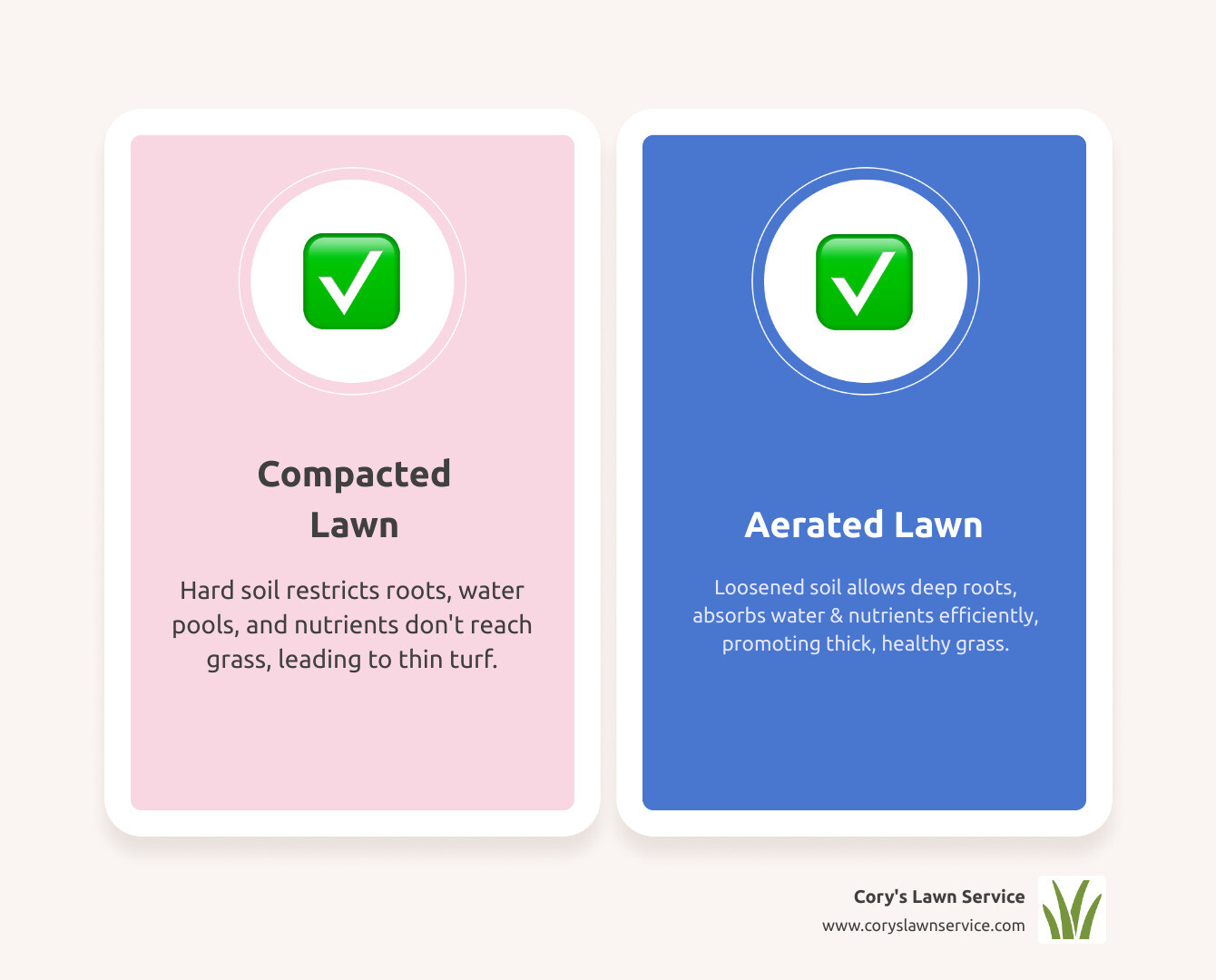
Detailed infographic showing a cross-section of lawn soil before and after core aeration, with labeled arrows indicating soil compaction on the left side and improved air, water, and nutrient flow on the right side, plus hollow tines extracting soil plugs and roots growing deeper into loosened soil - Core aeration benefits infographic comparison-2-items-casual

What is Core Aeration and How Does It Work?

Most homeowners know their lawn needs aeration, but understanding the process helps you appreciate why core aeration benefits are so dramatic.

Core aeration is a mechanical process using specialized equipment with hollow tines to physically remove small plugs of soil from your lawn. These tines penetrate 2 to 4 inches deep, extracting cores about ½ to ¾ of an inch in diameter. This is fundamentally different from just poking holes; core aeration actually removes soil plugs, which immediately relieves the compaction choking your grass.

The process leaves behind thousands of small holes that act as direct pathways for air, water, and nutrients to reach the root zone. The soil cores left on the surface might look messy, but they are beneficial. They contain microbes that help break down thatch—the layer of dead organic material suffocating your grass. As the cores decompose over a week or two, they return nutrients to the soil.

This process lets your lawn breathe again. In Reno's heavy clay soils, this mechanical intervention is critical. Water soaks in, fertilizer reaches the roots, and oxygen flows where it's needed most. Seeing those cores on your lawn is the first step toward a healthier yard. Learn more about Aerating Your Lawn and how our team can help your grass thrive.

The Top 7 Core Aeration Benefits for a Healthier Lawn
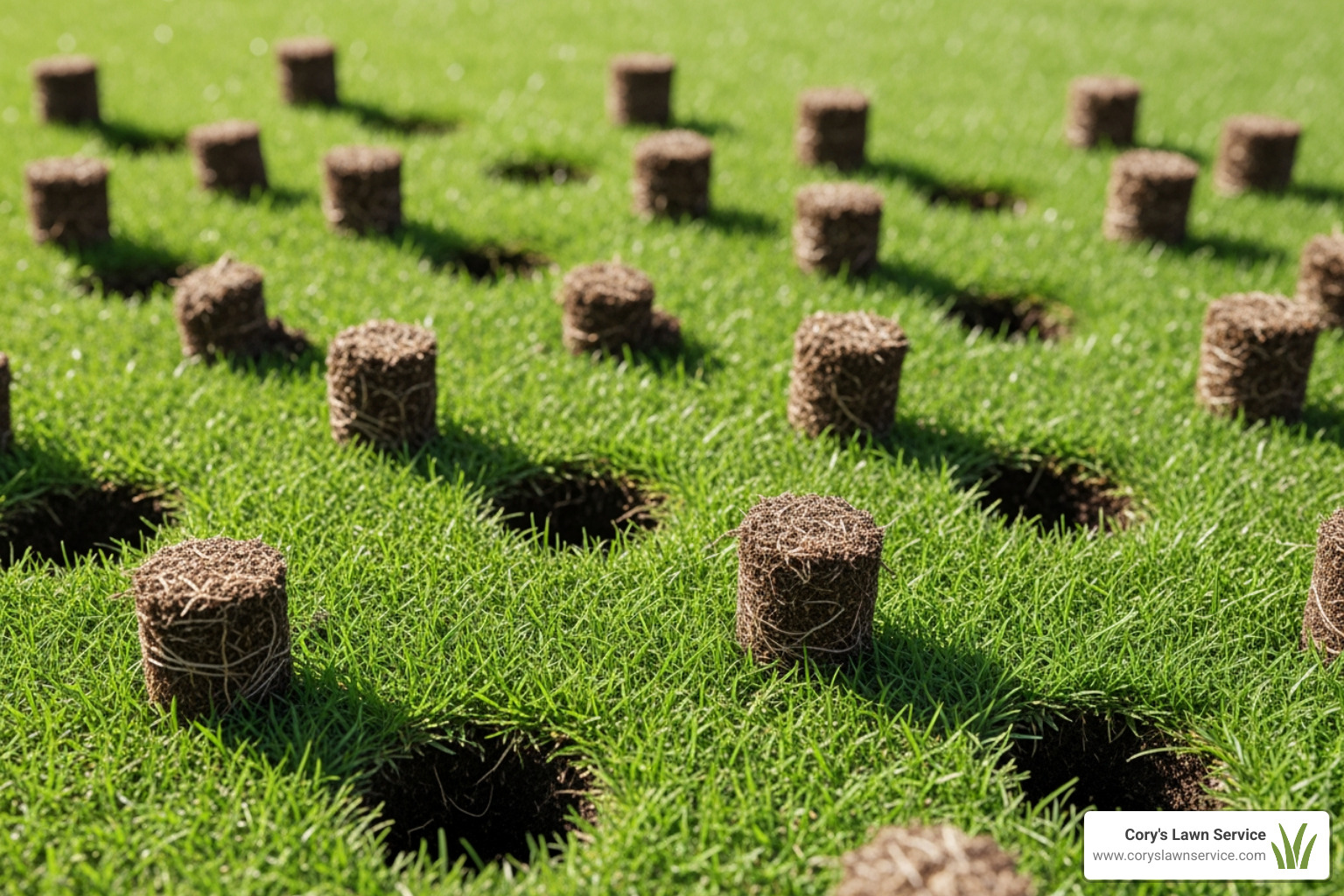
soil plugs lying on a lawn after aeration - Core aeration benefits

After nearly two decades working with Northern Nevada lawns, I can tell you that core aeration consistently delivers results. It's a proven method that addresses the root causes of lawn problems. Here are the seven most significant core aeration benefits we see changing Reno-area lawns every season.

1. Alleviates Harmful Soil Compaction

If your lawn feels rock-hard, that's soil compaction at work. Common in Reno's dense clay soils, compaction is caused by foot traffic, kids playing, and even normal equipment use. It squeezes out essential air space, trapping grass roots in the top few inches of soil where they struggle for water and nutrients.

Core aeration directly solves this by physically removing plugs of soil. This instantly creates space, loosens the compacted structure, and allows roots to grow deeper, making your entire lawn more resilient. For more on maintaining healthy soil, visit our Lawn Health Reno page or review this information on compacted soil from Clemson Extension.

2. Manages Excessive Thatch Buildup

A thin layer of thatch (organic material between grass and soil) is healthy, but when it exceeds half an inch, it becomes a suffocating blanket. This thick layer blocks water, fertilizer, and air, while creating a haven for pests and diseases.

Core aeration tackles thatch in two ways. First, the tines physically pull out some of the thatch with the soil cores. Second, and more importantly, the holes introduce soil microorganisms into the thatch layer. These microbes work 24/7 to break down the organic debris, naturally thinning the thatch over time. For more on this, see our guide on Dethatching Lawns in Reno.

3. Boosts Nutrient, Water, and Air Circulation
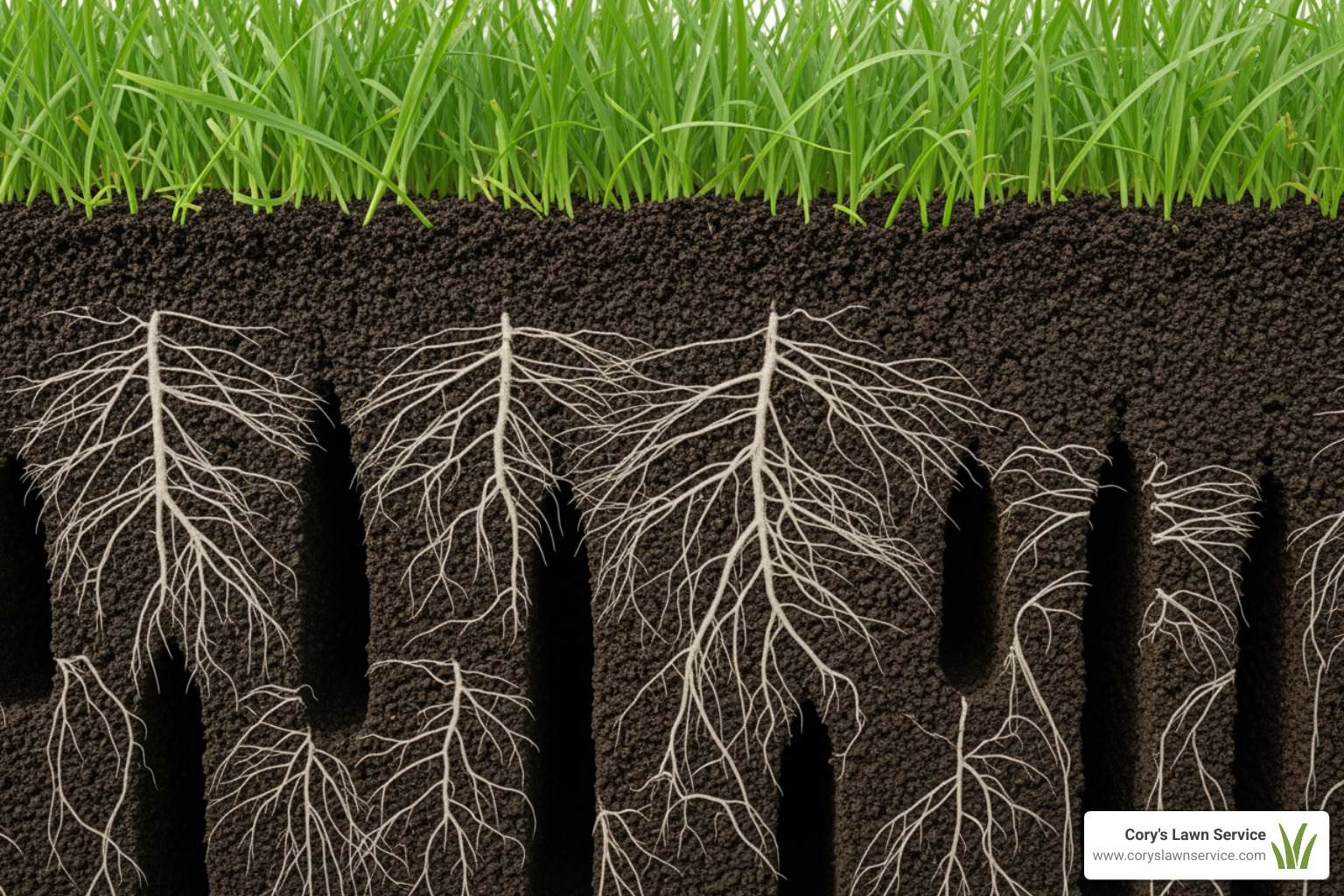
grass roots growing deeper into aerated soil - Core aeration benefits

Trying to feed and water a lawn with compacted soil is like trying to fill a bottle with the cap on. Core aeration opens up direct channels to the root zone, ensuring everything your grass needs gets to where it's needed.

  • Fertilizers finally reach the root zone instead of washing away.
  • Water soaks in immediately rather than pooling or running off, which is crucial in our dry Reno climate.
  • Oxygen flows freely to the roots, fueling the energy needed for healthy growth.

This improved circulation makes your grass use water more efficiently and respond better to fertilization, leading to the deep green color of a truly healthy lawn. This is a cornerstone of our Lawn Care Program.

4. Promotes Stronger Roots and Thicker Turf

The health of your lawn above ground is determined by what's happening below. When roots are restricted, your lawn will look thin and weak. Core aeration removes these barriers, allowing roots to grow longer and stronger.

This deep root network can access more resources, resulting in noticeably thicker turf. A dense lawn is nature's best weed barrier, as weeds can't find space to germinate. It also makes your lawn more resilient to foot traffic and environmental stress. Learn more about Understanding the Importance of Turf Density.

5. Improves Drought and Heat Tolerance

Northern Nevada summers are tough on lawns. The difference between a brown, crispy lawn and a green one often comes down to root depth. Shallow roots can only access surface water that evaporates quickly. Core aeration promotes deeper roots that can tap into moisture reserves several inches down, which last much longer between waterings.

Aeration also improves water infiltration, reducing runoff and evaporation. Your lawn makes the most of every drop, bounces back faster from summer stress, and requires less water to stay healthy. This aligns with proven methods for making lawns more drought-resistant.

6. Creates the Ideal Conditions for Overseeding

Overseeding right after aeration is the most effective way to fill in bare spots and thicken your lawn. The holes created by the aerator are perfect pockets for grass seed, ensuring critical seed-to-soil contact. This protects seeds from wind and birds and creates a moist microenvironment for germination.

For the best results when overseeding after aeration:

  • Double aerate in a crisscross pattern to maximize seed placement.
  • Apply grass seed generously for even coverage.
  • Gently drag the lawn with a mat to knock seeds into the holes.
  • Keep the area consistently moist for 21 to 28 days while seeds establish.

This combination produces a noticeably thicker, more uniform lawn that naturally resists weeds and disease.

7. Reduces Water Puddling and Runoff

Water pooling on your lawn or running into the street is a clear sign of compaction. The soil can't absorb water, leading to soggy spots, disease, and wasted resources, especially on sloped lawns common in areas like Caughlin Ranch and Somersett.

Core aeration solves this by creating thousands of channels for water infiltration. Rain and irrigation soak in immediately instead of running off. This improves drainage, distributes moisture evenly, and ensures your lawn uses water efficiently. It's one of the most visible core aeration benefits—the difference is clear after the first rain.

Core Aeration vs. Other Methods: What's the Difference?

Not all aeration methods deliver the same results. We exclusively use core aeration because it provides lasting benefits that other techniques can't match.

Core Aeration vs. Spike Aeration

The key difference is removal versus displacement. Core aeration uses hollow tines to physically pull small plugs of soil and thatch out of the ground, creating space and genuinely relieving compaction. In contrast, spike aeration uses solid tines to simply poke holes. This action pushes soil aside and can actually increase compaction around the hole, making the problem worse over time.

Feature Core Aeration Spike Aeration
Method Uses hollow tines to physically remove soil plugs Uses solid tines or spikes to poke holes
Soil Compaction Actively relieves existing compaction Can actually increase compaction around the holes
Thatch Impact Helps break down thatch by introducing microbes Little to no impact on thatch buildup
Long-Term Benefits Promotes healthier, stronger, more resilient turf Less effective; temporary relief, potential harm

Furthermore, the soil plugs removed during core aeration contain beneficial microbes that help decompose thatch when left on the lawn. Spike aeration offers no such benefit. For Reno's heavy clay soils, the choice is clear. The measurable core aeration benefits are why it's the only method we trust at Cory's Lawn Service.

Getting it Right: The Core Aeration Process

Understanding core aeration benefits is just the beginning. Proper timing and technique make all the difference between a lawn that merely survives and one that truly thrives.

Signs Your Lawn Needs Aeration

Your lawn will tell you when it's suffering from compaction. Here are the key signs to look for, especially in areas with heavy foot traffic or the dense clay soils common in Reno:

  • Poor drainage: Water pools on the surface after rain or irrigation.
  • Hard soil: The ground feels dense and hard underfoot. Try the screwdriver test—if you can't easily push a screwdriver a few inches into moist soil, it's compacted.
  • Thinning grass: Your lawn looks sparse or has bare patches despite proper watering and fertilizing.
  • Shallow roots: If you dig up a small section, the roots are only in the top inch or two of soil.
  • Excessive thatch: A spongy layer of organic debris thicker than half an inch is blocking air and water.

The Best Time to Aerate Your Lawn in Reno

Timing is crucial to maximize aeration benefits. For the cool-season grasses common in Reno, like Tall Fescue and Kentucky Bluegrass, you should aerate during their active growing periods.

Early fall (late August through mid-September) is the ideal time. The summer heat has passed, but the grass is still growing vigorously. This gives your lawn ample time to recover and establish stronger roots before winter. It's also the perfect time for overseeding.

Early spring (March through May) is the second-best window. The grass is waking up and ready to grow. We prefer fall for most lawns, but spring is also a viable option.

Crucially, the soil should be moist but not saturated. Watering your lawn 24 to 48 hours before the service is ideal. This allows the tines to penetrate deeply without creating a muddy mess. For more on timing, Clemson Extension's research on aeration timing supports this approach.

The Core Aeration Procedure: What to Expect

When you schedule a service with us, we make the process simple and effective to ensure you get maximum core aeration benefits.

Preparation: Before we arrive, please mark any sprinkler heads or shallow utility lines. It's also helpful to clear the lawn of toys or hoses and mow slightly shorter than usual. The most important step is to water your lawn 24-48 hours beforehand so the soil is moist but not soggy.

The Process: Our team uses commercial-grade aerators to make multiple passes over your lawn, often in a crisscross pattern for thorough coverage. The hollow tines pull out plugs of soil 2-4 inches deep and deposit them on the surface. Your lawn will be dotted with holes and covered in these small soil cores.

Aftercare: Leave the soil plugs on the lawn! Do not rake them up. They will break down in 1-2 weeks, returning valuable nutrients and microbes to your soil. Water your lawn thoroughly after we finish to send moisture deep into the root zone. This is also the perfect time to fertilize or overseed. Try to limit heavy foot traffic for a few days to allow the lawn to recover. Find out more on our Aerating Your Lawn service page.

DIY vs. Professional Aeration: Costs and Frequency

While renting an aerator is an option, it's a task where professional service offers significant advantages. Rental machines are often heavy, hard to use, and less effective than the commercial-grade equipment used by our experienced team. We ensure the job is done efficiently and correctly, saving you time and physical effort.

How often should you aerate? For most lawns in the Reno area, annual aeration is sufficient. However, for lawns with heavy foot traffic, dense clay soil, or severe compaction, aerating twice a year (spring and fall) can deliver dramatic improvements. You can't really "over-aerate" a compacted lawn.

The investment in professional aeration pays for itself in a healthier, more resilient lawn that requires less water and fertilizer. Learn more about our Aeration Service and other resources at our Reno Lawn Care Information hub.

Frequently Asked Questions about Core Aeration Benefits

After years of aerating lawns across Reno and Sparks, I've heard just about every question imaginable. Let me address the most common concerns we hear from homeowners who want to make the most of their core aeration benefits.

What should I do with the soil plugs left on my lawn?

Leave them right where they are! Those soil plugs might look messy, but they are a key part of the process. Each plug contains beneficial microbes that help break down the thatch layer. As they decompose over 1-2 weeks, they return valuable nutrients to your soil. Mowing and watering will help them break down faster. Resist the urge to rake them up; they are working for your lawn's health.

How soon after aeration can I fertilize or overseed?

Immediately! The best time to fertilize or overseed is within 48 hours of aeration. Your soil is open and receptive, with thousands of channels leading directly to the root zone. Grass seed will fall into the holes, giving it perfect seed-to-soil contact for germination and protecting it from wind and birds. Fertilizer will penetrate deep into the soil where roots can absorb it, rather than sitting on the surface. Acting quickly maximizes the benefits of both treatments.

How often should a typical lawn be aerated for optimal core aeration benefits?

For most residential lawns in the Reno area, annual aeration (preferably in the fall) is the recommended frequency. This maintains healthy soil and prevents compaction from becoming a major issue.

However, if your lawn experiences high traffic or is on heavy clay soil, aerating twice a year (spring and fall) may be necessary to keep it in top condition. For severely compacted lawns, multiple aerations in a season can be beneficial. Consistency is key to long-term lawn health. For more regional advice, visit our Reno Lawn Care Information page.

Let Your Lawn Breathe with Professional Aeration

For nearly two decades, we've seen one practice consistently transform struggling lawns in Reno, Sparks, and across Northern Nevada: core aeration. The core aeration benefits are clear—from relieving soil compaction and managing thatch to improving water use and promoting deeper roots. These are real, measurable improvements that help your lawn thrive in our challenging high desert climate.

Your lawn deserves to breathe. Those thin patches and hard soil are signs it needs help. At Cory's Lawn Service, we combine local expertise with professional-grade equipment to deliver quality results that last. We get the job done right the first time, so you can reclaim your weekends and enjoy a beautiful, healthy lawn.

Ready to give your lawn the breath of fresh air it needs? Let's work together to transform your outdoor space from the ground up.

Get a quote for your Reno lawn services today!

Getting Rid of Weeds: When Do You Need Professional Help?

Key Takeaways

Tips for effective weed control:
  • Identify weed types: Differentiating between annual and perennial weeds helps in selecting the right control methods.
  • Recognize infestation signs: Catching weed problems early prevents them from overtaking your garden or lawn.
  • Use proper tools: Having the right equipment like garden forks and herbicides ensures effective weed removal.
Check out our lawn care services.

Weeds are a common problem for gardeners and homeowners. These unwanted plants can quickly take over your garden, lawn, or flower beds, competing for nutrients, water, and sunlight with your desired plants. Weeds not only detract from the beauty of your outdoor space but also hinder the growth and health of your plants.

While many people try DIY methods to eliminate weeds, there are times when professional help becomes necessary. In this blog, we will explore the key highlights of weed control, including understanding different types of weeds, recognizing the signs of a weed problem, essential tools for weed removal, and when to seek professional assistance.

Understanding when to tackle weeds on your own and when to call in the experts can help you effectively eliminate weeds and maintain a beautiful and healthy garden.

Understanding Different Types of Weeds

Weeds come in various forms and have different characteristics. Understanding these differences is essential for effective weed control.

Garden weeds like dandelion and crabgrass are common invaders that quickly spread and take over your garden. Broadleaf weeds, like thistles, have leaves different from grasses and can be challenging to eliminate. 

By identifying and understanding the characteristics of other weeds, you can choose the most effective control methods.

Common Weeds and Their Characteristics

Garden weeds are a common problem for gardeners, and understanding their characteristics can help eliminate them effectively. One common garden weed is the dandelion (Taraxacum officinale), which has deep taproots that can grow as long as 15 feet. These taproots make dandelions difficult to remove completely.

Another common garden weed is crabgrass, a grassy weed that spreads rapidly and can quickly take over your lawn. Crabgrass grows from seeds that blow into your yard or can sprout from root pieces.

Broadleaf weeds often have spines or prickles and can be challenging to eliminate due to their deep root systems or ability to regenerate from root pieces left in the soil. Understanding the characteristics of common garden weeds can help you choose the most effective methods for controlling them.

Annual vs. Perennial Weeds: What's the Difference?

Differentiating between annual and perennial weeds is crucial for effective weed control. Annual weeds complete their life cycle in one growing season and then die, while perennial weeds survive for multiple years. Annual weeds rely on producing seeds to propagate, while perennial weeds can spread through both seeds and vegetative reproduction.

Crabgrass and chickweed are examples of annual weeds, while dandelions and thistles are examples of perennial weeds. The methods for controlling these two types of weeds differ as well. Check out this article for a more comprehensive list of annual and perennial weeds.

It is important to prevent seed production or kill annual weeds before they set seed. On the other hand, controlling perennial weeds may require removing the entire root system or using herbicides specifically designed for perennial weeds.

Understanding the difference between annual and perennial weeds can help you choose the most appropriate control methods for effective weed management.

Recognizing the Signs of a Weed Problem

Recognizing the signs of a weed problem is crucial for addressing it before it becomes unmanageable. Weeds can start taking over your garden or lawn, competing with your desired plants for essential resources.

Look for signs such as weeds outnumbering garden plants, moist soil in large areas where weeds have taken root, or weeds covering the entire plant. In lawns, indicators include patches of dry soil, weeds in shady areas where grass struggles to grow, or weeds growing on top of the soil.

By recognizing these signs, you can take proactive steps to address the weed problem before it becomes overwhelming.

When Weeds Start Taking Over Your Garden

When weeds start taking over your garden, it is a clear sign that they have become a problem. Garden plants may become overshadowed and choked out by the rapid growth of weeds.

Look for areas in your garden where the soil is consistently moist and favorable for weed growth. Weeds may also spread and establish themselves in large areas, making maintaining a clean and tidy garden difficult. 

In severe cases, weeds may cover the entire plant, reducing its access to sunlight and essential resources.

Essential Tools and Resources for Weed Removal

The right tools and resources can make getting rid of weeds easier and more efficient. Proper protective gear, such as gloves and goggles, is essential to ensure your safety while using herbicides or performing manual weed removal.

A spray bottle is useful for applying herbicides or homemade weed-killing solutions. Hot water can also be an effective and environmentally friendly weed control method.

Professional weed control services may be the best solution for persistent perennial weeds like bindweed or Japanese knotweed.

<<solution box>>

When DIY methods fail and weeds overrun your lawn, turn to Cory's Lawn Service. Their expert team uses advanced techniques and high-quality products to eliminate stubborn weeds and ensure your lawn thrives.

With Cory's Lawn Service, enjoy a pristine, healthy lawn without the hassle of tackling tough weeds on your own. Their professional touch guarantees long-lasting results, giving you peace of mind and a beautiful outdoor space year-round.

Protective Gear and Why It's Important

When it comes to weed removal, wearing appropriate protective gear is essential to protect yourself from potential health risks. 

Here are some reasons why protective gear is important:

  • Herbicides and homemade weed-killing solutions can contain chemicals that may irritate the skin and eyes. Wearing gloves and goggles can prevent direct contact with these substances.

  • A spray bottle may result in accidental splashes or sprays, making protective gear important to prevent contact with the skin or eyes.

  • Hot water can cause burns or scalding. Protective gear, such as gloves, can protect your hands from hot water exposure.

The Best Weed Removal Tools for Beginners

If you are a beginner in weed removal, having the right tools can make the process easier and more efficient. 

Here are some of the best weed-removal tools for beginners:

  • Garden fork: A garden fork is a versatile tool that can be used to loosen the soil around the weed roots, making it easier to remove the entire plant.

  • Hoe: A hoe is an effective tool for cutting or chopping weeds below the soil surface. It is particularly useful for removing large areas of weeds.

  • Weed killer: Various weed killer products, including selective and non-selective options, are available on the market. Choose a weed killer that suits your needs and follow the instructions for safe and effective use.

  • Spray bottle: A spray bottle is a practical tool for applying herbicides or homemade weed-killing solutions to individual weeds. It allows for precise application and minimizes the risk of overspray.

When to Seek Professional Weed Control Help

If you find yourself battling persistent weeds despite using home remedies like vinegar or pulling them out by hand, it might be time to call the professionals for weed control assistance. Recognizing when your efforts are ineffective is key - at this point, weed control service can save you time, money, and frustration.

Scenarios That Require a Professional's Touch

Certain scenarios may call for the expertise and assistance of a professional weed control service. Here are some situations that require a professional's touch:

  • Dealing with invasive weeds like Japanese knotweed can be challenging to eradicate due to their extensive root systems and aggressive growth habits. Professionals have the experience and knowledge to manage and eliminate these types of weeds effectively.

  • Managing extensive weed infestations in large areas, such as overgrown gardens or commercial landscapes. Professionals have the equipment and resources to tackle large-scale weed control projects efficiently.

  • Using specialized herbicides or chemicals that require professional expertise for safe and effective application. Professionals are trained in properly handling and applying these substances, minimizing the risk of damage to surrounding plants or the environment.

How to Choose a Weed Control Service

Choosing a weed control service can be a daunting task, but considering the following factors can help you make an informed decision:

  • Experience: Look for a weed control service with a proven track record and experience in successfully managing weed problems.

  • Reputation: Read reviews and ask for recommendations from friends, family, or neighbors using weed control services.

  • Methods used: Inquire about the weed control methods used by the service. Ensure they align with your preferences and values, such as organic or environmentally friendly approaches.

  • Service selection: Compare quotes and services offered by different providers. Consider cost, guarantees, and additional services like lawn care or landscaping.

Preventing Weeds from Coming Back

Preventing weeds from returning is just as important as getting rid of existing weeds. To achieve this, it is essential to implement preventive measures.

Proper mulching is one effective strategy that involves applying a layer of mulch around plants and in garden beds to suppress weed growth by blocking sunlight and preventing weed seeds from germinating. 

Another method is to use weed barriers such as landscape fabric to create a physical barrier that prevents weeds from growing in specific areas.

Regular maintenance is also crucial, as removing emerging weeds before they can establish and spread can help prevent their return. Additionally, ensuring correct watering and fertilization for your desired plants is important, as it promotes their health and density, helping them compete against weeds.

By incorporating these preventive measures into your gardening routine, you can reduce the likelihood of weeds returning and maintain a weed-free outdoor space.

Mulching as a Weed Deterrent

Mulching is a popular and effective method for preventing weed growth in flower beds and gardens. Covering the soil with a layer of mulch creates a barrier that prevents weed seeds from germinating and emerging.

Here are some key points to consider when using mulch as a weed deterrent:

  • Choose the right type of mulch for your needs, such as bark chips or compost.

  • Apply a layer of mulch at least 2-3 inches thick to smother existing weeds and prevent new ones from growing.

  • Leave a small gap around the base of plants to prevent moisture buildup, which can lead to rot.

  • Regularly inspect and replenish the mulch to maintain its effectiveness in preventing weeds.

Regular Lawn Care Tips to Prevent Weed Growth

Regular lawn care is crucial in preventing weed growth and maintaining the health and appearance of your turf. 

Here are some key tips to keep in mind:

  • Mow your lawn regularly to keep it at the proper height. Taller grass shades the soil, preventing weed seeds from germinating and establishing themselves.

  • Remove dry leaves and debris from your lawn regularly. These can provide hiding places for weed seeds and offer the perfect conditions for weed growth.

  • Water your lawn deeply and infrequently. This encourages deep root growth in your grass, making it more competitive against weeds.

  • Consider overseeding your lawn with turf varieties that are more resistant to weeds. These varieties have dense growth habits that make it difficult for weeds to establish.

To Wrap it Up

Understanding the signs of weed infestation and knowing when to seek professional help are key steps in maintaining a healthy garden or lawn. While some weed removal tasks can be handled independently with the right tools and resources, certain scenarios may necessitate the expertise of professional weed control services.

You can ensure a weed-free outdoor space by preventing weeds from coming back through practices like mulching and regular lawn care. Stay vigilant, address weed problems promptly, and consider professional assistance when needed for a well-maintained and beautiful landscape.

Lawn Mower Tune-Up: Essential Steps for a Smooth Running Machine

Key Takeaways

Lawn mower maintenance ensures:
  • Enhanced Performance: Regular tune-ups increase efficiency, prolong lifespan, and save money by preventing costly repairs.
  • Improved Cutting Quality: Sharp blades and proper maintenance contribute to an even and healthy lawn appearance.
  • Optimized Engine Health: Changing the oil and replacing spark plugs and air filters ensure the mower runs smoothly and efficiently.
Check out our lawn mowing services.

Maintaining your lawn mower is crucial to achieving a healthy and green lawn. A well-maintained lawn mower not only increases the efficiency of the machine but also prolongs its lifespan, saving you money in the long run. Regular maintenance checks can help ensure your lawn mower runs smoothly and efficiently, keeping your lawn looking its best. This blog will discuss the essential steps required for a smooth running machine. From understanding the importance of regular maintenance to getting started with your tune-up supplies, we cover it all. We will also walk you through each step of the process, including replacing the air filter, spark plugs, blade maintenance, and oil replacement. Read on to learn how to keep your lawn mower in top shape and achieve a beautifully manicured lawn.

The Importance of Regular Lawn Mower Maintenance

Regular lawn mower maintenance is crucial for a smoothly running machine and prolonged lifespan. Neglecting it can lead to costly repairs, while regular upkeep optimizes fuel efficiency and minimizes the risk of sudden breakdowns. By prioritizing preventive maintenance tasks such as blade sharpening, oil replacement, and air filter cleaning, you can ensure your lawn mower operates at its best. This small investment in time and effort pays off in the long run.

Enhancing the Efficiency of Your Mower

Consistent mower maintenance ensures efficient cutting, consistent power, and reduced engine strain. Proper upkeep, including tune-ups, enhances cutting performance and delivers an even grass cut. Regular maintenance is essential to prevent costly repairs and maximize fuel efficiency. Neglecting maintenance can lead to sudden breakdowns, which can be avoided with a small investment in easy maintenance tasks.

Prolonging the Lifespan of Your Machine

Consistent maintenance safeguards the mower from unnecessary damage, protecting it from premature wear and extending its overall lifespan. Regular tune-ups prevent the need for frequent replacements, making it a wise and low-tech investment. By preserving the engine components, proper maintenance reduces the need for costly repairs and keeps the mower running efficiently. This easy maintenance ensures optimal fuel efficiency and minimizes the risk of sudden breakdowns.

Want to Take Your Weekends Back?

Click here to visit our Lawn Mowing Services page for more information.

Getting Started: Gather Your Tune-Up Supplies

Before beginning, gather the required tune-up supplies to ensure a smooth maintenance process. Effective maintenance is crucial, and having the right tools and materials is essential. These supplies are vital for conducting a thorough tune-up and facilitating efficient lawn mower maintenance. Proper tools and materials are crucial for effective maintenance, ensuring a smooth and efficient tune-up process.

Tools and Materials Required

To perform a successful tune-up, essential tools like a spark plug wrench and socket wrench are required. Necessary materials include engine oil, a new spark plug, and an air filter. Safety gear, such as gloves and goggles, is crucial during maintenance, along with additional supplies like an oil drain plug, putty knife, and wire brush. Using the right tools, materials, and safety gear ensures a safe tune-up process.

Safety Considerations

Before conducting maintenance, prioritize safety by disconnecting the spark plug wire and letting the engine cool to avoid burns. Use gloves and protective eyewear, and ensure the mower is on a level surface. Always adhere to the manufacturer's safety guidelines for a safe tune-up. Safety must be the top priority during lawn mower maintenance.

Understanding and Replacing the Air Filter

The air filter's role in maintaining engine performance cannot be overstated. Proper air intake for the mower engine is ensured by a clean air filter. Neglecting it can lead to reduced power and efficiency. Consequently, replacing the air filter is crucial for optimal mower performance. Understanding this component's function is key to effective maintenance.

Why is a Clean Air Filter Important?

A clean air filter plays a crucial role in preventing debris and dirt from entering the engine, ensuring proper air filtration to prevent engine damage. It also promotes efficient fuel combustion and enhances the longevity of the engine. The air filter's job is to ensure the engine receives clean, debris-free air.

Step-by-Step Guide to Replace the Air Filter

Start by identifying the air filter housing within the mower engine. Carefully remove the air filter cover to access the old filter. Thoroughly clean the filter housing before fitting the new air filter securely, ensuring proper seating. Reattach the air filter cover, making sure it is firmly fastened. By following these steps, you can effectively replace the air filter in your lawn mower, promoting optimal engine performance and longevity.

The Role of Spark Plugs in Lawn Mowers

Spark plugs play a crucial role in igniting the air-fuel mixture within the engine, ensuring consistent performance. Neglecting spark plug maintenance can lead to engine misfires and hinder optimal fuel combustion. Understanding this vital component is essential for effective mower maintenance, making it necessary to regularly maintain and replace spark plugs as part of lawn mower maintenance practices.

The Function of Spark Plugs

Spark plugs play a critical role in igniting the air-fuel mixture within the engine, essential for the combustion process. They receive electrical current from the ignition system through a spark plug wire. Regular maintenance and replacement are necessary for efficient performance. Changing spark plugs can notably enhance fuel efficiency. Understanding the function of spark plugs is crucial for optimal lawn mower maintenance.

How to Replace a Spark Plug

To replace a spark plug, start by disconnecting the spark plug wire. Then, use a socket wrench to remove the old plug and check the gap of the new spark plug before installation. Apply a small amount of anti-seize compound to the threads and reconnect the spark plug wire. This ensures proper ignition and consistent engine performance.

Blade Maintenance for Optimal Performance

Regular maintenance of blades is crucial for achieving an even cut and maintaining a healthy lawn. Blunt blades can lead to uneven, ragged cuts, while sharp blades reduce mowing time and effort. Additionally, proper blade maintenance extends the life of the mower engine. This includes safe removal and sharpening techniques to ensure optimal performance and prevent grass blades from tearing, promoting a well-manicured lawn.

The Need for Sharp Blades

Maintaining sharp blades is essential for a healthy, attractive lawn as they create a clean, fine cut on the grass blades. Dull blades not only damage the grass but also make it susceptible to disease. Regular blade sharpening ensures the mower's cutting efficiency, reduces mowing time, and minimizes the risk of damaging the mower engine. Sharp blades contribute significantly to the overall well-being of the lawn.

Safe Removal and Sharpening of Mower Blades

Before performing any maintenance, always ensure the mower engine is off and the spark plug wire is disconnected. Use a putty knife to clean the underside of the mower deck, removing any grass build-up. Secure the blade in place before sharpening using a bench grinder or a file. Don't forget to balance the blade before reattaching it to the mower deck for optimal operation.

Oil Replacement for Smooth Operation

Regular oil changes are essential for maintaining mower engine performance. Fresh oil reduces friction, preventing excessive wear and potential overheating. Follow the manufacturer's guidelines for oil type and volume to ensure optimal lubrication. Additionally, don't overlook the oil filter during changes, as it contributes significantly to smooth operation. Neglecting oil maintenance can lead to costly repairs or even engine failure.

The Impact of Fresh Oil on Mower Performance

Proper lubrication of engine components is ensured by fresh oil, extending the mower engine's lifespan. Clean oil leads to improved fuel efficiency and smoother operation. Additionally, it maintains the engine's cooling capabilities. Regular oil changes are essential to achieve these benefits. Consistent maintenance tasks, including oil replacement, contribute to optimal lawn mower performance and should not be overlooked.

How Often Should I Change My Lawn Mower's Oil?

For optimal performance, it's important to change your lawn mower's oil regularly. Check the manual for recommended intervals, which can be influenced by factors like mowing season, frequency, and engine model. Consider changing the oil at the beginning of the mowing season and always drain the used oil when the engine is warm. Dispose of old oil at a local mechanic or recycling facility.

Conclusion

In conclusion, regular maintenance is essential for keeping your lawn mower in optimal condition. It not only enhances the efficiency and performance of your machine but also prolongs its lifespan. Gathering the necessary supplies and following the step-by-step process for tune-up is crucial. Remember to replace the air filter to ensure clean air intake and replace spark plugs to maintain proper ignition. Additionally, sharpening the blades regularly promotes a clean and even cut. Lastly, don't forget to change the oil at recommended intervals to ensure smooth operation. By following these essential steps, you can ensure that your lawn mower runs smoothly and efficiently, providing you with a well-maintained and beautiful lawn.

How Often Should I Water My Lawn During The Summer?

Key Takeaways

Optimal lawn watering techniques:
  • Watering Timing: Watering early in the morning reduces evaporation and fungal growth.
  • Frequency and Depth: Less frequent, deep watering encourages deeper root growth and drought resistance.
  • Adapting to Weather: Adjust watering based on rainfall and temperature to prevent overwatering or drought stress.
Check out our sprinkler services.

If you live in Reno, Nevada (or any other semiarid climate location), you know how hot and dry the summer months are. Some families choose stone and gravel landscaping due to the extremely dry temperatures, and others want the look and feel of a traditional grass lawn.

This brings us to the question: how often should you water the lawn during the summer? There are a few factors to consider when deciding how often and how much to water your lawn. 

What Type of Grass Do You Have?

Knowing what type of grass you have to begin with is essential. If you are just starting to plant new grass seed, you will want to research to determine what type of grass will thrive. Cool-season grasses are typically found in Northern Nevada, including Kentucky bluegrass and tall fescue. Cool-season grasses have adapted to thrive in areas with extreme seasonal temperature changes (cold winters, hot summers). 

Time of Day

Living in a dry climate means that water restrictions may be put into place for when you can and cannot water your lawn. Your local water utility company can provide you with your assigned water days. 

When it’s time to water, doing so during the cool summer mornings means that more of the water will reach the roots before evaporating. Then, as the sun comes out and the air warms up, the newly watered grass will slowly dry out over the course of the day.

If you only water your lawn during the afternoon's peak, then a lot of that water will evaporate immediately and never actually reach the root system of the lawn.

If you cannot water in the mornings, early evening is the next best time. Remember, in Reno/Sparks, we can have strong afternoon winds, which may blow the water away from the areas you are trying to reach. So check weather conditions before turning on those sprinklers. Additionally, leaving the lawn damp during the nighttime hours can promote possible disease. Be mindful of the potential hazards of watering the lawn at night.

How Much and How Often?

A general rule of thumb is to water your lawn one inch of water per week. You can use a rain gauge to measure an inch of water or grab a can and place it in the yard. Be sure to place the rain gauge (or can) in a shaded part of the yard so that the water does not evaporate in the sun. 

An early sign of stress to the lawn is noticing the grass turning from rich green color to more of a dark and dull green before it starts to lighten up and go dormant/brown. Additionally, if you notice that you do not need to mow the lawn as often as previously, there could be a problem with how much water it receives. 

These are signs that you may need to water your grass for more extended periods or check to ensure that your sprinklers are reaching all lawn areas. 

What Type of Sprinkler Should You Use?

The best sprinkler system is a programmable irrigation system. This allows you to set the days of the week, times of day, and length you want to water your lawn. An irrigation system provides you with the best coverage and ensures even watering. In addition, you can ensure your lawn is watered when you leave for vacation. 

If you don’t have an irrigation system, your best choice for an established rectangular lawn is an oscillating sprinkler. This will give you even coverage for a large area. 

If your lawn has lots of objects around it (sheds, a pool, decks, etc.), you will want to use an impact sprinkler. These sprinklers go around in a circle, spraying a continuous stream of water. You can set up impact sprinklers in different places around your yard to hit the grassy areas without soaking others areas of your yard.

The Best Lawn Care Service In Reno & Sparks

Are you looking to spend time on your favorite things and skip the grueling yard work?

Cory’s Lawn Service can help with that. Whether for general cleanup, weekly mowing, aeration, or fertilization and weed control, we're ready to help you get your weekend back. Our team has provided quality, expertise, and gets-done-right-the-first-time lawn care services since 2006, and we’re not stopping anytime soon. So reach out to us today for a free consultation!

Grass Mowing 101

mowing grass

Key Takeaways

Grass mowing essentials:
  • 1/3 Rule: Never cut more than a third of the grass length to prevent damage.
  • Optimal Height: For cooler climates, maintaining a grass height of 2-3 inches is ideal.
  • Bag or Mulch: Mulching is recommended for regular mowers as it naturally fertilizes the turf.
  • String Trimmers: Use carefully around tree trunks to prevent damage.
Check out our lawn mowing services.

If you are like me, the very first time you started to cut your grass you had absolutely no clue what you were doing. Just as it is dangerous to give a sharp knife to a baby, it can be dangerous to our lawn to give a man a mower without proper knowledge of how to use it. Since the grass is just starting to grow this season, you should consider when it's the right time to pull out the dusty old lawn mower and give the grass its first haircut.  But while lawn mowing seems simple enough, most people don't know that there are actually a few basic things to keep in mind to ensure the best health of the lawn.

Use the 1/3 rule:

You never want to cut your grass more than one third of its current length. Cutting any more than this can be damaging for the turf. If you skipped a week of mowing and now the height of your lawn is excessive, make sure to raise up the height of the mower before you cut, then mow a few days later with your normal mowing height.

Length of Grass:

Since Reno is considered a cool climate consisting of mainly Kentucky Blue Grass and Fescue, our mowing height is going to be slightly longer than that of warm climate grasses. In general, around 2-3" is a good height for our region. Do keep in mind that during the hotter summer months you will want to keep you grass a little longer to help protect your turf.

Bag or Mulch:

If you are a home owner and are on a consistent once a week mowing schedule, I would suggest mulching your grass clippings. Clippings are actually a natural fertilizer for your turf as long as it is mowed properly. If you mow your lawn once a month and ignore the first two suggestions, then the clippings are not small enough to break down to become fertilizer for the soil and will actually damage your lawn if left in larger clumps. If you have large clumps of grass after mulch mowing, then make sure you rake those up before calling it a day.

damaged tree

Side Note for String Timmers:

If you have a string trimmer and want nice edges around your grass, or to clear the grass from around the tree trunks, be careful! It might seem like tree trunks are durable enough to take the abuse of a small amount of string, but after weekly beatings the string will actually break down the bark of the tree and kill it. Check out this BLOG for more information about how to protect your trees for string trimmers and mowers and just be careful.

Watering your Lawn 101

funny watering lawn

funny watering lawn

Key Takeaways

Effective lawn watering insights:
  • Optimal Timing: Watering between 4am and 10am reduces evaporation and wind interference.
  • Proper Quantity: Ensuring your lawn receives 1" of water weekly can be measured with a simple can test.
  • Addressing Brown Spots: Before assuming disease, check for poor sprinkler coverage as a potential cause.
  • Regulation Compliance: Adhere to assigned watering days to avoid fines and support water conservation.
Check out our sprinkler services.

Now that we are a few weeks into the mowing season and the weather is warming up, many people are wondering how much they should water their lawn using a programmable irrigation system. I wish that there was a single answer like, "water these three times and I guarantee you will have a green lawn," but, unfortunately, it is not that easy. However, there are some watering times that are better than others, and some basic tips to see how much water your lawn needs, so let me help you with your lawn watering questions in the Reno area. When Should I Water?

After reading this you will realize this is common sense for the Reno area, but we live in a desert. During the summer, from early afternoon through late afternoon it normally gets hot and windy. If you water in the late afternoon you will most likely experience a higher evaporation rate, as well as water blowing into the streets instead of your lawn! Considering this, I recommend loading up and watering your lawn between the hours of 4am and 10am.

How much should I water?

This is where things get a little tricky, but the rule of thumb is to make sure your lawn is getting 1" of water a week. Some gauge this by placing a tuna can in the middle of the yard and measuring the water accumulated throughout the week. If you perform this test, realize that some areas of your lawn are probably exposed to the sun for longer periods of time throughout the day, so set up the can in a shaded spot as well as a sunny spot for a more accurate measurement.

bad watering

bad watering

What To Do If You Have Brown Spots:

Most people assume that if their lawn is developing some dead spots it is due to some type of lawn disease, but this might not always be the case. Normally, brown spots are due to poor sprinkler coverage. If you have some dead spots you should check the sprinkler coverage before jumping to any other conclusions. All you have to do is turn on your water and see if the brown spots are being reached by the sprinklers. You will be able to quickly tell if the sprinkler heads have been knocked out of place or broken.

Are There Days I Can't Water?

The answer to this question is "yes." Here is Reno, we have assigned watering days set by Truckee Meadows Water Authority, which states:

- Even Address: Watering Days = Tuesday, Thursday, Saturday

- Odd Address: Watering Days= Wednesday, Friday, Sunday

Anything Else?

The good news about the Kentucky blue grass that is mainly grown in Reno is that it is able sustain a rather long drought period, like the ones we see during the winter when the lawn goes dormant. So, if you have brown spots, forgot to activate the irrigation system, or went on vacation and your water was shut off, then there is a good chance your turf will be able to withstand this period of drought. Also, make sure not to starve your lawn by under watering it, and make sure to water on your assigned TMWA days or you might end up with a fine for failing to follow the rules.

How to Prepare Your Lawn For the Winter (Guest Post)

How to Prepare Your Lawn For the Winter (Guest Post)

Winter is coming fast. It is time for big holidays, with a great deal of shopping, decoration, cooking, having guests over and a ton of other activities. People spend more time inside their houses, and often times completely forget about their lawn area. It is one thing you should certainly find time for, unless you want to risk an ugly green patch in spring, or even other drastic problems, such as broken pipes and a whole ton of trouble. Preparing the lawn for winter is something you should do in late fall if you want to have a beautiful grass in spring. With heat and dryness are at end, it is time to take some steps in ensuring your grass is just as good next year as it was this summer. So, after you are done with patio cleaning, turn your attention to the lawn, if you want to grow one that is admirable and presentable.

Tips for Perfect Sod Grass Care (Guest Blog)

sod install

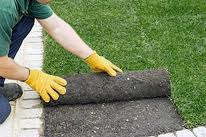
sod install

Key Takeaways

Optimal sod care offers:
  • Watering: Essential for root establishment and soil moisture, even for low-water varieties.
  • Fertilization: Various types support root strength, disease resistance, and grass growth.
  • Mowing: Regulates growth capacity and, depending on the grass type, may require immediate clipping removal or not.
  • Additional Care: Includes irrigation to build roots and using pesticides to protect against pests.
Check out our lawn fertilization services.

So you’ve planted your sod grass and now have to maintain it. There are a number of ways to properly keep your newly sodded lawn from becoming dried out. Take a look at these steps and follow them closely to have your lawn looking its best.

  • Water - Even if the type of grass you’re growing does not need lots of watering, you still have to give it some for proper growth. The best recommendation is to water your lawn daily but only if recommended for your type of grass. Water is essential for anything to grow, it aids in the root establishment and gives the soil moisture.

  • Fertilizer - You want your lawn to look healthy, especially as you have invested money and time into this project and want it to be perfect. Fertilizers help this task by giving the grass all the vital nutrients it needs to grow and look its best. There are several different fertilizations that make sod grass grow well:

      • Phosphorus Fertilization - This type helps strengthen the roots.

      • Potassium Fertilization - Its main objective is to build a defense against harsh climate changes and diseases.

      • Nitrogen Fertilization - This one is not long-lasting, but aids in the advancement of grass.

      • Mowing - An easy and effective way to keep your grass growing to its fullest potential is to mow it. This helps maintain the right level of growth capacity. Some sod grasses do require that the clippings be bagged or raked immediately after mowing. Cut grass left on your lawn may suffocate the new grass and prevent it from growing. Others types do not need to be raked. This is related to their ability to feed off of the cut grass, which provides it with nutrients. Research which type of grass you choose to plant first.

Things that should be used at a later date to keep a healthy lawn:

  • Irrigate - Like watering your lawn daily, you will also need to irrigate it. This will help in building the roots up and is done by literally poking holes in your new yard. You can do this with the use of cleats like professional athletes wear. Walk around your newly planted grass, then water. This will help get moisture into the soil and aid in the winter months when the ground tends to get hard and brittle.

  • Pesticides - You may lose your lawn if it is not properly cared for. Insects and other animals such as gophers tend to feed off of grass. A good way to avoid this damage is to spray your yard with a pesticide. These are made to keep insects and animals from feeding off of your lawn. Some of the new pesticides on the market are safe for use around children and harmless to family pets.

If you've failed to maintain a healthy lawn, you can always start over by getting sod laid by a professional if you click here. These are surefire ways to keep your lawn healthy and maintained. Proper care is needed when planting grass at first. You will need to tend to it daily to ensure its fullest potential before being able to enjoy it.

How to Mow Straight Lines on Large Yards

Key Takeaways

Mowing techniques offer:
  • Visual Appeal: Straight lines enhance the lawn's aesthetic beauty.
  • Efficiency: Methodical patterns reduce time and effort.
  • Health Benefit: Consistent mowing direction promotes grass health.
Check out our lawn mowing services.

While training new employees I have found that mowing straight lines in larger yards is not something that comes easily for some people. It almost seems inevitable that if you are using a walk behind mower and traveling a longer distance your first line is going to be crooked. This is problematic because it's the line used to base the rest of the mowing pattern off of. I have created a brief video to show how I used a crooked first line as a means to develop straight lines. Although this might seem basic to some people, I have seen many home owners and lawn care companies mow entire yards based off of an initial crooked line, ending up with a wavy pattern in the grass.

The video below demonstrates how to produce straight mow lines after starting off with an "S" shaped line.

Once the crooked first pass has been completed, look for the section of it that has the straightest line. In this case, the beginning of my first pass had the straightest point, so I lined the wheel up with the wheel pattern of the first 50' or so and overlapped the end of my first pass. Now, after two passes, I have corrected the latter half of the first line.

I complete my third pass by repeating what I did with my second line, overlapping the final portion that remains crooked. After three passes I now have two straight lines as well as a straight reference point from which to mow the rest of the lawn.

[youtube]https://youtu.be/3uKQSYX_UDU[/youtube]

Dethatching Lawns in Reno

thatch

thatch

Key Takeaways

Dethatching in Reno offers:
  • Seasonal Timing: Typically performed in Spring to coincide with aeration, enhancing root system access to nutrients, air, and water.
  • Thatch Management: A light layer is beneficial, but excessive thatch from Kentucky bluegrass needs removal to prevent damage.
  • Proper Technique: Unlike aeration, dethatching should not be done on wet lawns to avoid turf damage and ensure thatch is effectively removed.
"Check out our yard cleanup services."

Dethatching is something that is normally done in the Spring and often coincides with the aeration process. Just like lawn aeration, dethatching is done in to allow nutrients, air, and water to have better access to the root system. Areas of the country consisting of tall fescue and perennial ryegrass do not have to worry as much about a heavy thatch layer build up, but unfortunately Reno consists of mainly Kentucky blue grass, which does tend to have a quicker build up of thatch growth. A small layer of around 1/2" thatch growth can actually be beneficial for your lawn because it can help protect the turf from the hot summer sun, help prevent weed germination, as well as reduce water evaporation. Although there are some great benefits to dethatching, it is important to make sure that if you hire someone to "power rake" the lawn it is not done right after the lawn has been watered. Unlike lawn aeration, which normally gets better core penetration just after a good soak, dethatching a wet lawn can leave you with damaged and ripped up sections of turf. Another important factor after power raking is to make sure that the loose thatch is properly raked up instead of left on the grass or mowed over. Some companies attempt to just mow over the loose thatch, but this will mulch up the dead stems and roots and put them right back into the lawn. The other day, we took a minute to shoot a quick video to show you just how much thatch is pulled up after dethatching a single 30 foot strip. From a distance this lawn does not look like it has a thick thatch layer, but once the power rake gets rolling you can see just how much dead stuff has been removed. Check out the video to get an better idea of what dethatching is and whether or not your turf might need it done. [youtube]https://www.youtube.com/watch?v=H3eLWyVjoDI[/youtube]

The Secrets to Ballpark Turf Perfection

Reno Aces

Key Takeaways

Ballpark turf perfection offers:
  • Year-Round Dedication: Maintaining perfect turf requires full-time, year-round effort to ensure quality and consistency.
  • Visual Consistency: The goal is achieving a field appearance that looks equally impressive regardless of the season.
  • Early Season Readiness: Techniques enable the turf to appear vibrant and green even when other lawns are still dormant.
Check out our lawn fertilization services.

Nothing other than "perfection" can describe the Reno Aces baseball field. Whether it is the checkerboard mowing patterns everyone wishes their front lawns had, or the ideal shade of green turf, the Aces ballpark is as good as it gets.

I had the extreme pleasure to meet up with Head of Grounds Eric Blanton to briefly discuss what it takes to keep this ballpark looking as good as it does. Eric assured me that it takes more than just showing up a couple hours before game time a few days a week to mow and fertilize - it takes a full time job year round to ensure a quality field for players and fans. Eric said, "Our goal is for someone to take a picture of the field and not be able to tell if the photo was taken in February or August."

Aces

The picture above was taken on April 3rd during the Aces vs. UNR game, just two days before a snowy season opener. It was this photo made me wonder "how do they make it look so good so early in the season?" While every lawn and golf course in Reno is still dormant, the Aces ballpark has completed their mission to make it look like this image was taken in August. In the video below, Eric and I spend a few minutes discussing some of the ins and outs of maintaining Aces ballpark, along with what it takes to become an award winning Head of Grounds for a minor league baseball team.

Irrigation Disaster: Do it Right!

Licensed and insured

Key Takeaways

Irrigation insights:
  • Professional versus Amateur: Opting for a professional ensures your irrigation system is installed correctly, avoiding costly mistakes.
  • Cost of Errors: Amateur installations can lead to significant issues, such as leaks from improperly joined pipes.
  • Quality Assurance: Hiring licensed professionals can prevent future complications and ensure the system's longevity.
Check out our irrigation services.

Dilemma: Where should we draw the line when deciding to hire a professional or save money and hire an amateur? This question is simple if we are talking about who to go to if you have a broken arm, or even who to hire to build your house, but at what point does the grey area come into play where you might be more focused on getting a job done, rather than getting it done right?

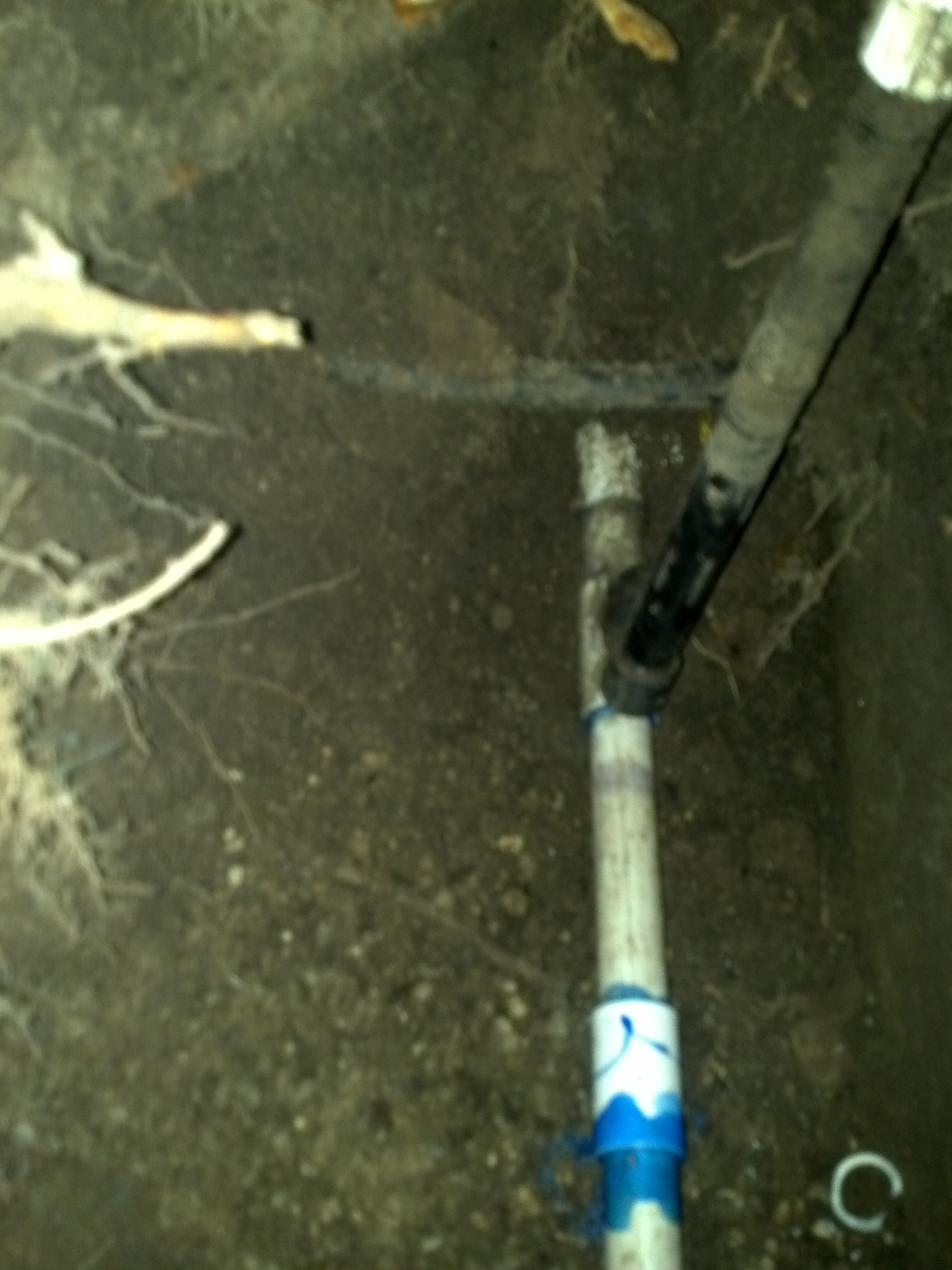
Broken PVC pipe

Quick Story:

I pose this question because when I activated my irrigation system the other day I noticed I had a leak. This was not just any leak, it was coming from about 3' underground in a very random place that should never be damaged. After an hour of digging I was expecting to find some cracked PVC pipe, but to my surprise I simply found that the pipe had separated from its joint. Whoever installed the system forgot to use any glue on this small section, which basically means it was being held together like two pieces of Legos. This was just one of many issues that have come up with my irrigation since we moved in, so it's clear that whoever installed this system took many shortcuts and installed things incorrectly.

Solution:

So just as you might be ready to hire anyone to install your irrigation system, think about being in this situation in the future. I have had several customers ask me to fix underground piping issues that have broken or were installed incorrectly, and although I know how to do it I normally direct them to call someone who is licensed for this type of work to make sure it is done right. I can fix my own irrigation - but I am no expert.

Ask yourself this question - Does fixing my irrigation fall within the grey area between hiring an amateur and hiring a professional? Before you go with an amateur, think twice about the consequences and possibly spend the extra buck to have the job done right.

Top 5 Considerations Before Signing a Lawn Care Service

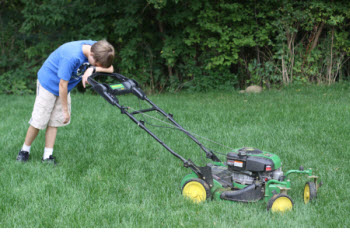
upset lawn kid

Key Takeaways

Lawn care service considerations:
  • Community Feedback: Utilize neighbors' experiences to find reputable lawn care services.
  • Professional Credentials: Ensure the service is licensed, indicating reliability and accountability.
  • Trustworthiness: Personal interaction with providers offers a measure of their reliability and the security of your property.
  • Contract Awareness: Read contracts carefully to avoid being locked into unsatisfactory agreements.
Check out our lawn care services.

If this is the first year you are considering hiring a lawn care service or are in need of a change from the same crappy service year after year, here are the TOP 5 things to consider before  hiring a lawn care provider. These recommendation are not the guaranteed way to hire the most stellar lawn care provider around, but since this is a business that practically anyone can start up there are some things to watch out for.  I will admit and know for a fact that Cory's Lawn Service may not be the best fit for what you're looking for, but after being in the business for some time I can tell you some things to look out for and avoid so you can hire a service that does fits your needs. 1.) Talk to your Neighbors:

There is still no better way to find a good business than through word of mouth. Whether its a restaurant or a vacation spot we don't trust anything more that what others have to say.  Have you noticed that your neighbors use a lawn care services? Be a nice neighbor and bring over a plate of cookies and ask them how they ended up choosing the service they currently use, how they like them, and what downfalls there have been to using the service.

1332203185190

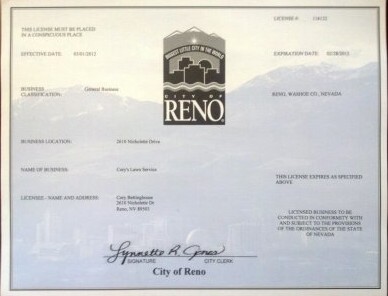
2.) Hire Someone with a Business License:

If you're hiring little Timmy from down the street who is trying to make money to go to summer camp this year then ignore this one and have the kid wash your car as well. But if you're hiring a small business to take care of your property this year, then that's what they should be, a licensed small business which all business are required to places in a visible spot for anyone to see. This insures you that they are registered with the state and city in case of any injury or damage is done to your property they will be easy to find and are most likely insured as well.

3.) Hire who you trust:

Almost all lawn care providers will come to your home for a free estimate and if they don't that might be a red flag already. This allows you the opportunity to meet them first hand and ask any questions before you commit to signing any type of contract. See if they will be the person who will be on your property weekly, and if not try and meet the people that will. Your lawn care provider will get to know your property quickly and when you're home or not. If you can't trust them in person with you home, can you trust them on your property when your out of town?

lawn guys

4.) Check reviews online:

This day in age so many people are using social media. In a matter of minutes you can check online if they are reputable and trustworthy. Review sites like Google places and Yelp will bring up reviews from past customers along with a 1 to 5 star rating according to past work done. If you don't want to spend the time asking a neighbor, this is the second best way to find a little bit about what you're dealing with.

5.) Read the fine print:

Unfortunately this is where I have heard people getting into trouble. If you have to sign a weekly lawn care contract read the fine print. Make sure you are not locked into your contract in case the company is awful. Also make sure that the company is not going to charge you the regular rate during winter when the grass is not growing and they are now mowing on a weekly bases.

DG Installation in Reno

DG 2

Key Takeaways

DG installation enhances landscapes:
  • Low Maintenance: Decomposed Granite (DG) is a low maintenance landscape material, ideal for property enhancement.
  • Visual Appeal: Applying a 1 1/2" - 2" layer of DG around shrubs and perennials offers a clean, aesthetically pleasing look.
  • Easy Application: Adding more DG to landscapes is simple and can significantly beautify your property.
Check out our lawn cleanup services.

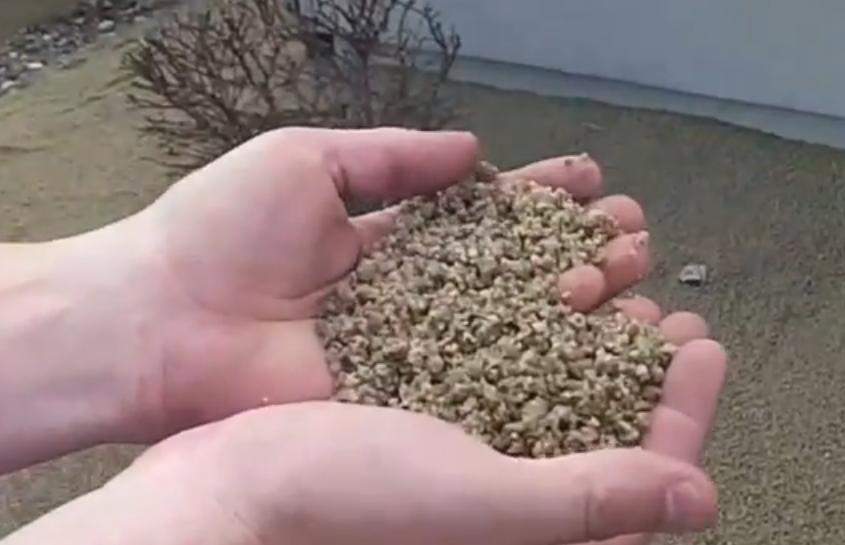
The time of year has come to start taking a look around your property and seeing what needs to be done. So this weekend stand out on your front porch as your grab your morning paper in your bath robe with a cup of coffee in hand and take a quick look at what might need to be done around your property before the mowing season starts. Most homes in Reno have parts of their property surrounded by Decomposed Granite (DG for short). Even if you didn't realize it, your property probably has DG somewhere on it, and although it is the lowest maintenance portion of landscape you have, it is something that still needs to be attended to every now and then. DG is Granite Rock that has decomposed over time, or been crushed down to become another type of low maintenance decorative rock that is used on most properties in Reno. The problem is, over time the DG decomposes even more and is either just blown away or thins out. Although it is not necessary to add more DG to your landscape it is a very easy process you can do on your own or hire someone to do beautify your property. For a nice clean look around your shrubs and perennials, it is recommended that you have between 1 1/2" - 2" layer of DG. This will last for several years and allow you to decoratively rake your DG so your landscape looks like the sand traps of a PGA golf course.

Cory's Lawn Service is currently adding DG to 15 homes in the northwest Reno area, and wanted to take a quick video of what we have done on a local customers property, to help beautify her desert-scape for years to come. If your DG coverage is looking a little thin please feel free to contact us for any help you might need.

[youtube]https://www.youtube.com/watch?v=KgZXd4LoRL0&context=C4e51814ADvjVQa1PpcFPx7JAKY9g4keXtgbnMg3LFetFh9D1Z5Uk=[/youtube]